

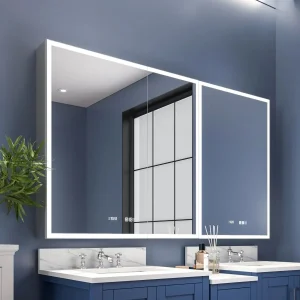


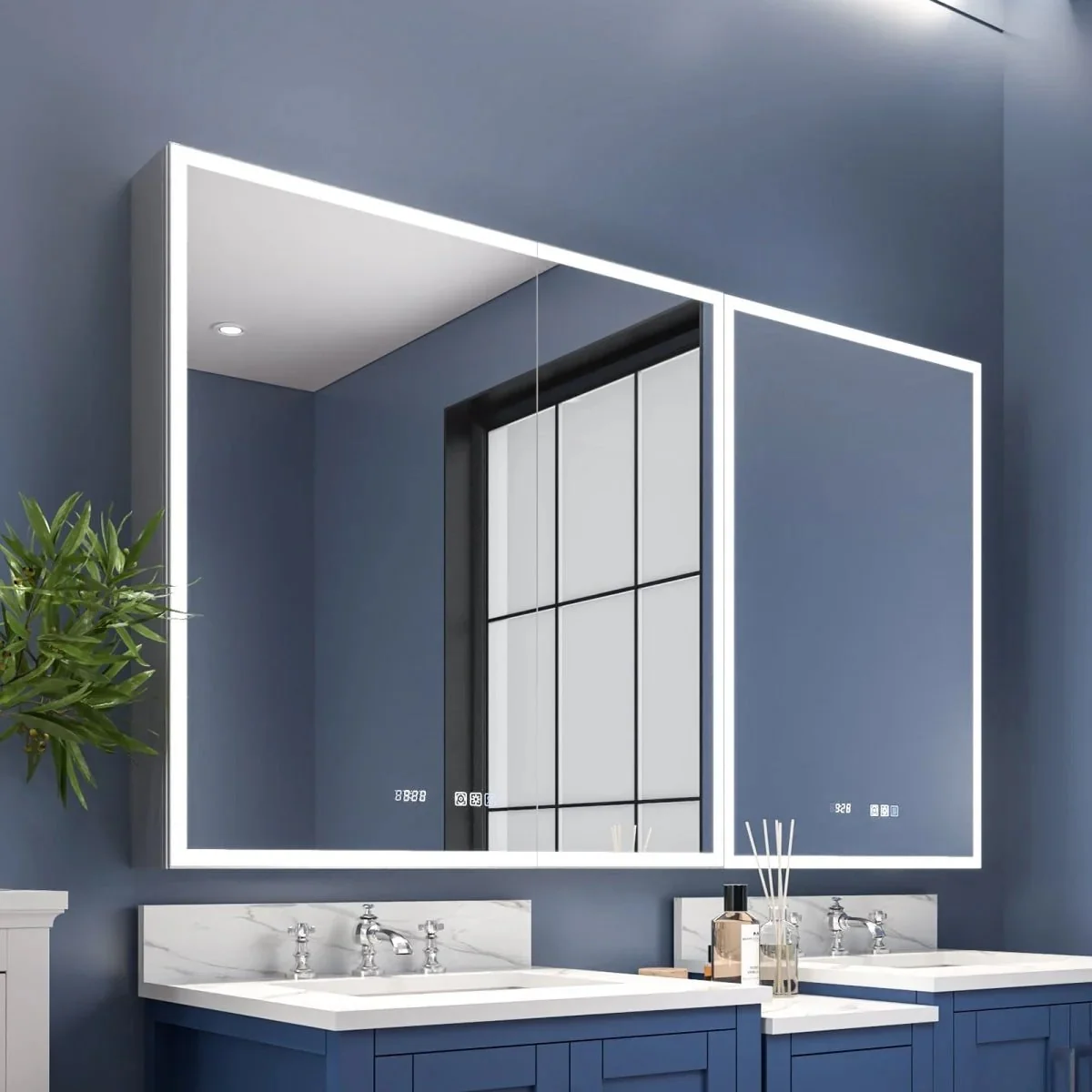
A LED medicine cabinet with mirror puts storage, reflection, and task lighting on a single wall. That combination is why more homeowners choose one when they update a bathroom.
Overhead fixtures rarely light a face evenly, and open shelves clutter a small vanity quickly. A well-built cabinet addresses both problems in one footprint. This guide covers what to look for before you buy.
Why Homeowners Are Making the Switch
The appeal comes down to everyday convenience. A lighted, mirrored cabinet changes how a bathroom works in several practical ways:
- Even lighting at face level: Light built into the mirror reduces the shadows that ceiling fixtures cast under the eyes and chin.
- Fewer separate fixtures: Integrated lighting can reduce the need for sconces or a light bar above the vanity.
- Hidden storage: Interior shelves keep medications, skincare, and grooming tools behind the mirrored door.
- Cleaner counters: Moving daily products off the vanity makes a small bathroom feel larger.
Lighting Features That Matter
Not every lighted mirror performs the same. These specifications separate a quality unit from a basic one:
- Color rendering index (CRI 90+): A high CRI shows skin tones and fabrics as they look in daylight, which helps with shaving, skincare, and makeup.
- Adjustable color temperature: A range from 3000K (warm) to 6000K (cool daylight) lets you match the light to the room or the task.
- Dimming: Low settings suit late-night visits, while full brightness helps with detailed grooming.
- Touch-sensor controls: A simple touch panel replaces bulky switches and keeps the glass easy to clean.
- Anti-fog function: A mirror that resists condensation stays usable after a hot shower.
Storage and Power Details
Lighting gets the attention, but the practical details decide how useful the cabinet is every day:
- Built-in outlet: An internal outlet rated up to 1800W lets you plug in a shaver, electric toothbrush, or hair tool without trailing cords across the counter.
- USB charging: USB-A and USB-C ports keep phones and small devices charged inside the cabinet.
- Soft-close hinges: Doors close slowly and quietly, which protects the glass and avoids slamming.
- Magnetic door catches: Doors stay shut without rattling.
- Adjustable shelving: Flexible shelf heights make room for tall bottles and small jars alike.
- Safety certification: An ETL or UL listing confirms that the electrical components passed recognized testing.
Choosing the Right Size and Mounting Style
Getting the fit right matters as much as the features. Before you order, work through these decisions:
- Measure the wall space: Confirm the width and height available, plus the clearance needed on either side of the vanity.
- Match the cabinet to the vanity: A cabinet roughly two-thirds to three-quarters the width of the vanity usually looks balanced.
- Recessed or surface mount: Recessed units sit flush inside the wall for a streamlined look but require a wall cavity. Surface-mount units attach to the wall face and need no cutting.
- Door style: Single-door units suit narrow spaces, while double and triple-door models give wider mirror coverage and more shelf room.
Installation Tips for First-Timers
A lighted cabinet needs power, so planning ahead saves time and money:
- Locate the power source early: Find the nearest outlet or junction box before you choose a model.
- Check the wiring method: Some cabinets plug in, while others are hardwired. Hardwired installations should be done by a licensed electrician.
- Mark the stud locations: Mounting into studs gives the cabinet a secure hold, especially with a full load of products.
- Level before you fasten: A small tilt is easy to notice in a large mirror, so check it twice.
- Read the instructions first: Clear installation guides make a DIY project realistic for many homeowners.
Final Thoughts
A good LED medicine cabinet with mirror does more than hold toiletries. It improves visibility, reduces clutter, and consolidates several fixtures into one tidy unit. Focus on color accuracy, adjustable lighting, built-in power, and sturdy hardware, then match the size and mounting style to your wall.
Support matters too. Retailers such as Allsumhome publish detailed installation guides and offer engineer support by phone or email, which helps first-time installers. Whichever supplier you choose, confirm those details before you buy.