




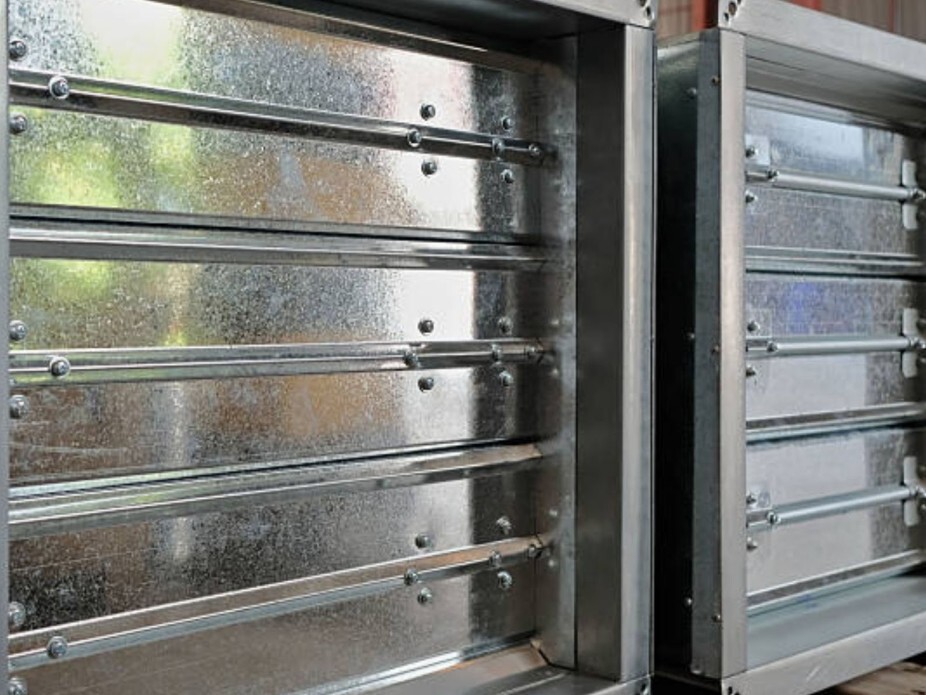
The dampers HVAC professionals install play an important role in controlling where conditioned air travels through a building. In a zoned system, motorized dampers can open or close individual duct branches based on thermostat calls, allowing the system to direct heating or cooling toward occupied areas. Correct selection and installation can improve room comfort while reducing unnecessary airflow to spaces that do not currently need it.
What Is an HVAC Damper?
An HVAC damper is a plate, blade, or valve installed inside ductwork to regulate airflow. Depending on its position, the damper can allow air to pass freely, reduce its volume, or block most airflow through a duct branch.
Manual dampers are adjusted by hand and generally remain in the selected position until someone changes them. They are commonly used during system balancing or for seasonal airflow adjustments.
Motorized dampers use an electric actuator to change position in response to a control signal. They can work with thermostats, zone control panels, switches, and other compatible controls. This makes them useful when airflow must change automatically based on conditions in different parts of a building.
How Do Motorized Dampers Work?
A motorized damper is usually installed within a round or rectangular duct. The actuator moves the internal blade when it receives an electrical signal. Depending on the damper and control configuration, the blade may open fully, close fully, or move between selected positions.
In a typical zoned HVAC system, each zone has its own thermostat. When a zone requires heating or cooling, the control panel calls for system operation and opens the damper serving that area. Dampers connected to zones that do not require conditioned air may remain closed.
Once the thermostat reaches its set temperature, the control system changes the damper position. This automated response helps manage airflow without requiring occupants to adjust duct controls manually.
Where Are Motorized Dampers Commonly Used?
Motorized dampers can support airflow control in several residential and light commercial applications. They are often found in multistory houses where upper and lower floors have different temperature patterns.
They may also be used in:
- Home additions connected to existing ductwork
- Finished basements with separate comfort requirements
- Guest rooms that are not occupied every day
- Workshops and converted garages
- Offices with varying occupancy schedules
- Buildings with separate living and working areas
- Rooms affected by strong afternoon sunlight
Builders and remodeling contractors may include dampers when creating separate comfort zones within an expanded floor plan. HVAC contractors can also use them when adding zoning controls to a suitable existing system.
What Is the Difference Between Manual and Motorized Dampers?
Manual dampers are relatively simple and work well for fixed airflow balancing. A technician can adjust them during commissioning to direct an appropriate amount of air toward each branch. They may also be repositioned between heating and cooling seasons if a building’s airflow requirements change.
Motorized dampers are better suited to applications where airflow must respond to thermostat calls or occupancy patterns. Their electrical actuators allow automatic operation, but they require compatible wiring and controls.
The correct choice depends on the purpose of the damper. A manual model may be sufficient for balancing a branch that consistently receives too much air. A motorized model may be more appropriate when a building needs separate temperature zones that change throughout the day.
What Should Contractors Consider Before Selecting a Damper?
Duct size and shape are the first considerations. The damper must match the duct dimensions and installation orientation. Contractors should verify whether the application requires a round or rectangular unit and confirm available space around the duct.
Additional selection factors include:
- Operating voltage
- Control-system compatibility
- Normally open or normally closed operation
- Actuator type
- Blade design
- Airflow direction
- Temperature rating
- Access requirements
- Fail-safe behavior during a power interruption
The damper must also suit the airflow and pressure conditions within the system. Product specifications should be reviewed before installation rather than choosing a unit based only on duct diameter.
Why Does System Design Matter?
Closing one or more duct branches changes the pressure within an HVAC system. If too many dampers close at once, static pressure may rise beyond acceptable levels. This can increase noise, reduce airflow across the equipment, and place added strain on the blower.
A zoning plan should account for minimum airflow requirements. Depending on the equipment and duct design, the system may require a bypass arrangement, pressure-relief method, variable-speed equipment, or controls that limit how many zones can close simultaneously.
Motorized dampers cannot correct undersized ducts, poorly designed returns, dirty filters, failing blowers, or major duct leakage. Contractors should inspect the broader system before treating a damper as the answer to every room-comfort complaint.
What Installation Practices Help Prevent Problems?
Installers should place dampers where they can be reached for inspection, wiring, and future service. The actuator should not be obstructed by framing, insulation, pipes, or other mechanical components.
All electrical work should follow the damper manufacturer’s instructions and applicable codes. After installation, each damper should be tested through a full operating cycle. The technician should confirm that the blade opens and closes correctly, the thermostat controls the intended zone, and the system maintains acceptable airflow when other zones are closed.
Labeling the damper and its corresponding zone can make future troubleshooting easier. Home inspectors and service technicians can then identify the purpose of each unit without tracing the entire duct branch.
Better Airflow Starts With the Right Components
Motorized dampers give contractors and property owners a practical method for controlling airflow across separate rooms or zones. Success depends on correct sizing, compatible controls, thoughtful duct design, and accessible installation. To compare motorized damper options and other products for residential or light commercial airflow applications, visit Suncourt and select components that match the system’s dimensions, voltage, and control requirements.