




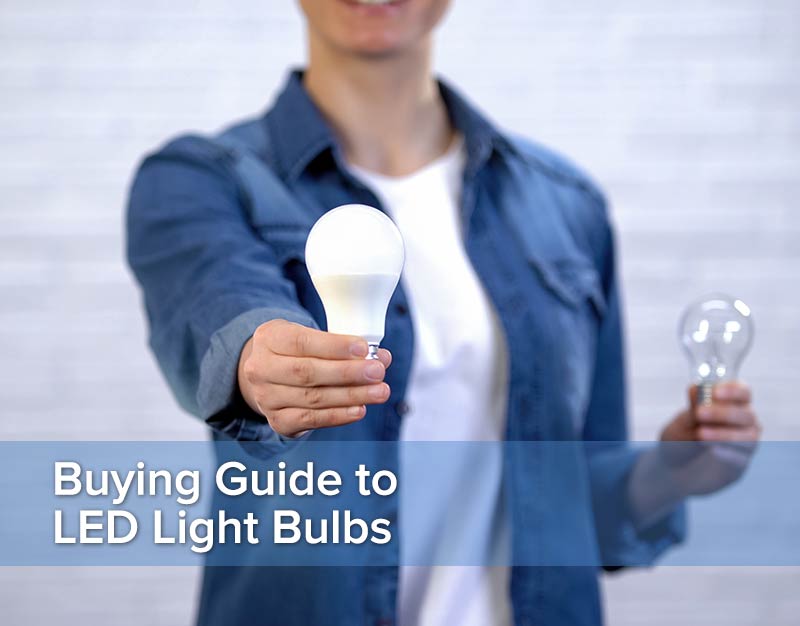
Lighting plays a major role in the comfort, functionality, and energy efficiency of your home or business. Whether you’re replacing an old incandescent bulb or upgrading an entire property to LED technology, choosing the right LED light bulb can make a significant difference in brightness, energy savings, and overall lighting quality.
With so many options available, it’s easy to feel overwhelmed by different wattages, lumens, color temperatures, bulb shapes, and features. This guide explains everything you need to know before buying an LED light bulb so you can confidently select the best option for your space.
Why Choose an LED Light Bulb?
LED (Light Emitting Diode) bulbs have become the preferred lighting choice because they outperform traditional incandescent, halogen, and compact fluorescent (CFL) bulbs in nearly every category.
Benefits of LED Light Bulbs
- Consume up to 80–90% less energy than incandescent bulbs
- Last significantly longer, often 15,000–50,000 hours
- Produce less heat, improving safety and efficiency
- Available in various brightness levels and color temperatures
- Turn on instantly without warm-up time
- Require minimal maintenance
- Environmentally friendly due to lower energy consumption and longer lifespan
For homeowners and businesses alike, switching to LED lighting reduces electricity costs while providing reliable, high-quality illumination.
Understand Brightness: Lumens Matter More Than Watts
One of the biggest misconceptions when buying lighting is assuming higher wattage means a brighter bulb.
With LEDs, lumens measure brightness, while watts indicate energy consumption.
| Brightness | Approximate Lumens | Traditional Wattage | LED Wattage |
| Soft Accent | 250–450 | 25–40W | 3–5W |
| Standard Room Lighting | 800 | 60W | 8–10W |
| Bright Workspace | 1,100–1,600 | 75–100W | 12–16W |
| Very Bright Areas | 2,000+ | 150W | 18–25W |
When shopping, prioritize lumens instead of wattage.
Choose the Right Color Temperature
Color temperature determines whether the light appears warm, neutral, or cool.
It is measured in Kelvin (K).
| Color Temperature | Appearance | Best For |
| 2200K–2700K | Warm White | Bedrooms, living rooms |
| 3000K | Soft White | Dining rooms, hallways |
| 3500K–4000K | Neutral White | Kitchens, offices |
| 5000K | Daylight | Bathrooms, garages |
| 6500K | Cool Daylight | Workshops, warehouses |
Quick Tips
Choose warm white if you want a cozy atmosphere.
Choose neutral white for balanced everyday lighting.
Choose daylight for detailed tasks requiring excellent visibility.
Pick the Correct Bulb Shape
Different fixtures require different bulb shapes.
Common options include:
A19
The most common household bulb.
Ideal for:
- Table lamps
- Ceiling fixtures
- Floor lamps
BR30 and BR40
Designed for recessed can lighting.
Ideal for:
- Living rooms
- Kitchens
- Hallways
PAR Bulbs
Provide focused directional lighting.
Used in:
- Outdoor floodlights
- Track lighting
- Security lighting
Globe Bulbs
Round decorative bulbs often found in bathroom vanities.
Candelabra Bulbs
Perfect for:
- Chandeliers
- Wall sconces
- Decorative fixtures
Check the Bulb Base
The bulb base must match your fixture.
Common base types include:
- E26 (standard household)
- E12 (candelabra)
- GU10
- MR16
- G9
- GU24
Always verify the fixture requirements before purchasing.
Indoor vs Outdoor LED Bulbs
Not every LED bulb is suitable for outdoor use.
Indoor Bulbs
Best for:
- Bedrooms
- Offices
- Living rooms
- Kitchens
Outdoor Bulbs
Designed to withstand:
- Rain
- Humidity
- Temperature fluctuations
- Dust
Outdoor fixtures should also be rated for wet or damp locations depending on exposure.
Consider Dimmable vs Non-Dimmable Bulbs
Many homeowners want adjustable lighting.
However, not every LED bulb supports dimming.
Choose a dimmable LED if you have:
- Dimmer switches
- Mood lighting
- Home theaters
- Dining rooms
Pair the bulb with an LED-compatible dimmer switch to prevent flickering.
Smart LED Light Bulbs
Smart lighting offers additional convenience.
Features may include:
- Voice control
- Smartphone app control
- Scheduling
- Color changing
- Brightness adjustment
- Remote access
Compatible ecosystems often include:
- Amazon Alexa
- Google Home
- Apple HomeKit
Smart LEDs are excellent for improving convenience and energy management.
Look for Energy Efficiency Certifications
Quality LEDs often include certifications that indicate performance and safety.
Look for:
- ENERGY STAR® certification
- UL Listed
- ETL Listed
- DLC Listed (commercial lighting)
These certifications provide confidence that the product meets recognized standards.
Check the Color Rendering Index (CRI)
CRI measures how accurately colors appear under the light.
- CRI 80: Standard residential lighting
- CRI 90+: Excellent color accuracy
High-CRI bulbs are ideal for:
- Bathrooms
- Kitchens
- Art studios
- Retail stores
- Photography
Estimate Lifespan
LED bulbs typically last far longer than traditional lighting.
Approximate lifespan:
| Bulb Type | Average Lifespan |
| Incandescent | 1,000 hours |
| Halogen | 2,000 hours |
| CFL | 8,000 hours |
| LED | 15,000–50,000 hours |
Although LEDs cost more initially, their longer lifespan reduces replacement costs over time.
Common Mistakes to Avoid
Buying the wrong LED bulb can lead to poor lighting performance.
Avoid these common mistakes:
- Choosing based only on wattage
- Ignoring lumens
- Selecting the wrong color temperature
- Buying an incompatible base
- Using indoor bulbs outdoors
- Forgetting dimmer compatibility
- Purchasing low-quality products without certifications
Taking a few extra minutes to verify specifications can save time and money.
Best LED Light Bulbs for Different Spaces
Living Room
- Warm White (2700K)
- Dimmable
- A19 bulbs
Kitchen
- 3000K–4000K
- High CRI
- Bright task lighting
Bedroom
- Warm White
- Soft brightness
- Dimmable options
Bathroom
- 4000K–5000K
- High CRI
Garage
- Daylight (5000K)
- High lumen output
Office
- Neutral White (4000K)
- Flicker-free lighting
- High CRI
Is It Worth Switching to LED?
For most homes and businesses, the answer is yes.
LED lighting offers lower energy consumption, reduced maintenance, longer service life, and better lighting quality compared to older technologies. Whether you’re upgrading a single room or replacing every bulb in a commercial property, LEDs provide long-term value through energy savings and reliable performance.
Frequently Asked Questions
How many watts should an LED light bulb use?
Most LED bulbs use between 8 and 12 watts to provide brightness comparable to a traditional 60-watt incandescent bulb.
Which LED color temperature is best?
It depends on the application:
- 2700K for relaxing spaces
- 3000K–4000K for general use
- 5000K for task lighting
Do LED bulbs save money?
Yes. LEDs consume significantly less electricity and last much longer than traditional bulbs, helping reduce both energy and replacement costs.
Can LED bulbs be used in enclosed fixtures?
Some can, but not all. Always check the manufacturer’s specifications to ensure the bulb is rated for enclosed fixtures.
Are LED light bulbs environmentally friendly?
Yes. Their lower energy consumption and extended lifespan reduce waste and environmental impact compared to many traditional lighting options.
Final Thoughts
Buying the right LED light bulb doesn’t have to be complicated. By understanding key factors such as lumens, color temperature, bulb shape, base type, dimming capability, and certifications, you can choose lighting that fits your needs while maximizing energy efficiency and performance.
Whether you’re upgrading residential lighting or selecting bulbs for a commercial project, investing in high-quality LED products ensures better illumination and long-term savings. If you’re looking for a wide selection of dependable lighting solutions, Buy LED Online offers LED bulbs and fixtures for homes, offices, warehouses, and other commercial applications, making it easier to find the right lighting for your space.