



How to Pair Estate Wedding Bands With an Antique Engagement Ring
Couples who buy a period engagement ring often assume the band is the simple part. Then the two rings arrive, sit side by side on the finger, and leave a visible gap where the band cannot clear the engagement ring’s setting. The problem is common enough that experienced dealers raise it before the customer does. Choosing estate wedding bands successfully means treating the pair as a single fitting problem rather than two separate purchases, and the earlier that shift happens, the more options remain available.
None of this is difficult. It simply requires knowing what to account for.
First, Understand What Estate Actually Means
The terminology is used loosely across the market, which causes confusion.
Estate refers to previous ownership. An estate ring may be a hundred years old or five. Antique conventionally means at least a century old. Vintage generally indicates something between roughly twenty and a hundred years, though usage varies.
A ring can be all three or only one. When a listing uses estate alone, ask for the actual period, because the term establishes provenance rather than age.
Why Period Rings Rarely Sit Flush
Modern bridal sets are designed as pairs, with the band contoured to the engagement ring’s profile. Period rings were not made this way.
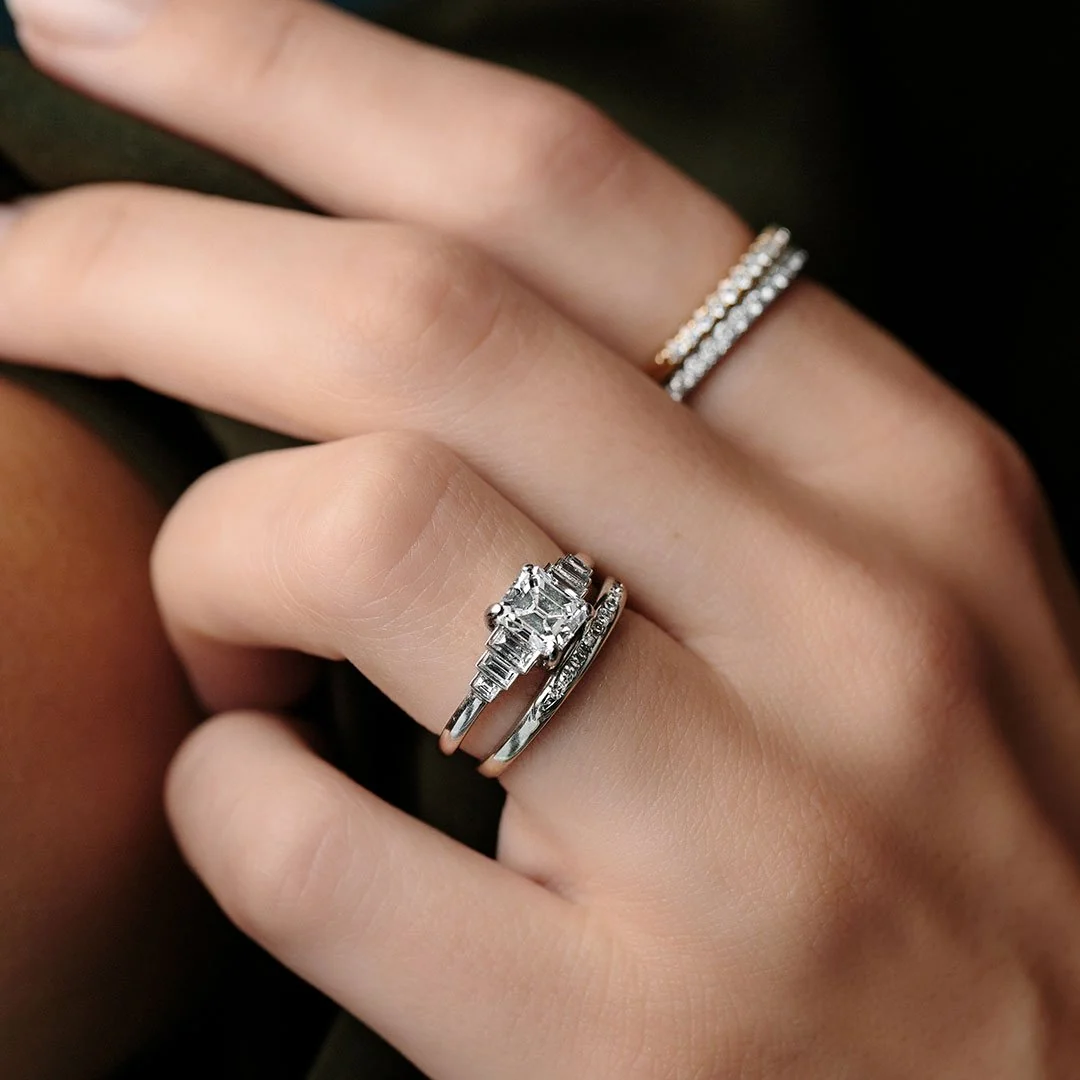
Antique engagement rings frequently have low galleries, decorative shoulders, engraved shanks, or stones set along the sides. Any of these prevents a straight band from making contact. The result is a gap that ranges from barely noticeable to structurally awkward.
The gap is not a defect. It is a consequence of two rings from different origins meeting on one finger, and there are several good answers to it.
Four Ways to Solve the Gap
Choose a narrow band. A slim band flexes visually and often nestles closer than a wide one. This is the simplest solution and preserves the period character of both rings.
Choose a band with a compatible profile. Some period bands have curved or shaped edges that happen to accommodate a raised setting. Bringing the engagement ring to the dealer, or sending clear photographs including a side profile, allows a genuine match rather than a guess.
Wear the band on the other hand. Increasingly common and entirely practical. It removes the fitting constraint completely and lets each ring be chosen on its own merits.
Add a spacer. A plain, very narrow band worn between the two closes the gap and provides a buffer against contact wear. Some couples find this an elegant solution rather than a compromise.
What experienced dealers generally advise against is having an antique band custom notched to fit. It permanently alters a period piece and reduces its value considerably.
Matching Metal Across Decades
Rings from different eras may not match in color even when nominally the same metal.
Platinum and white gold read differently side by side, with white gold typically appearing slightly warmer unless rhodium plated. Yellow gold varies by karat, and higher-karat period gold looks noticeably richer than modern 14k.
Deliberate mixing works well and is a legitimate choice. Accidental mismatching, meaning two whites that are almost but not quite the same, tends to look unintentional. Decide which you are doing.
What Can and Cannot Be Resized
This is where post-purchase disappointment concentrates, so ask before buying.
Plain bands generally resize within a reasonable range. Bands with stones set fully around the circumference, meaning full eternity styles, usually cannot be resized at all. Bands with engraving around the shank lose the pattern where the metal is cut and rejoined. Bands with channel-set stones can sometimes be adjusted slightly but risk loosening the settings.
Ask the seller what range is achievable on the specific piece before committing.
Wear Patterns and Long-Term Contact
Two rings worn together in constant contact will wear against each other over decades. Softer metals abrade faster, and a higher-karat gold band against a platinum engagement ring will show the effect on the gold.
This is manageable rather than alarming. Have both rings inspected annually by a jeweler experienced with antique settings, watch for prong wear on the engagement ring where the band contacts it, and consider a spacer if the contact is heavy.
Shopping the Pair Together
The most reliable approach is bringing the engagement ring with you, or working with a dealer who will assess fit from detailed photographs including a clear side profile.
A specialist who handles period pieces regularly will identify the fitting issue immediately and steer you toward bands that actually work, which saves considerable time.
Finding the Right Band
Treat the band and the engagement ring as one decision. Confirm what estate means for the specific piece, account for the profile before falling in love with a band, check resizing limits, and plan for long-term contact.
For couples working through exactly this, Gesner Estate Jewelry carries period bands across eras with the condition and fitting detail these decisions require. Visit the site to browse the current selection.