




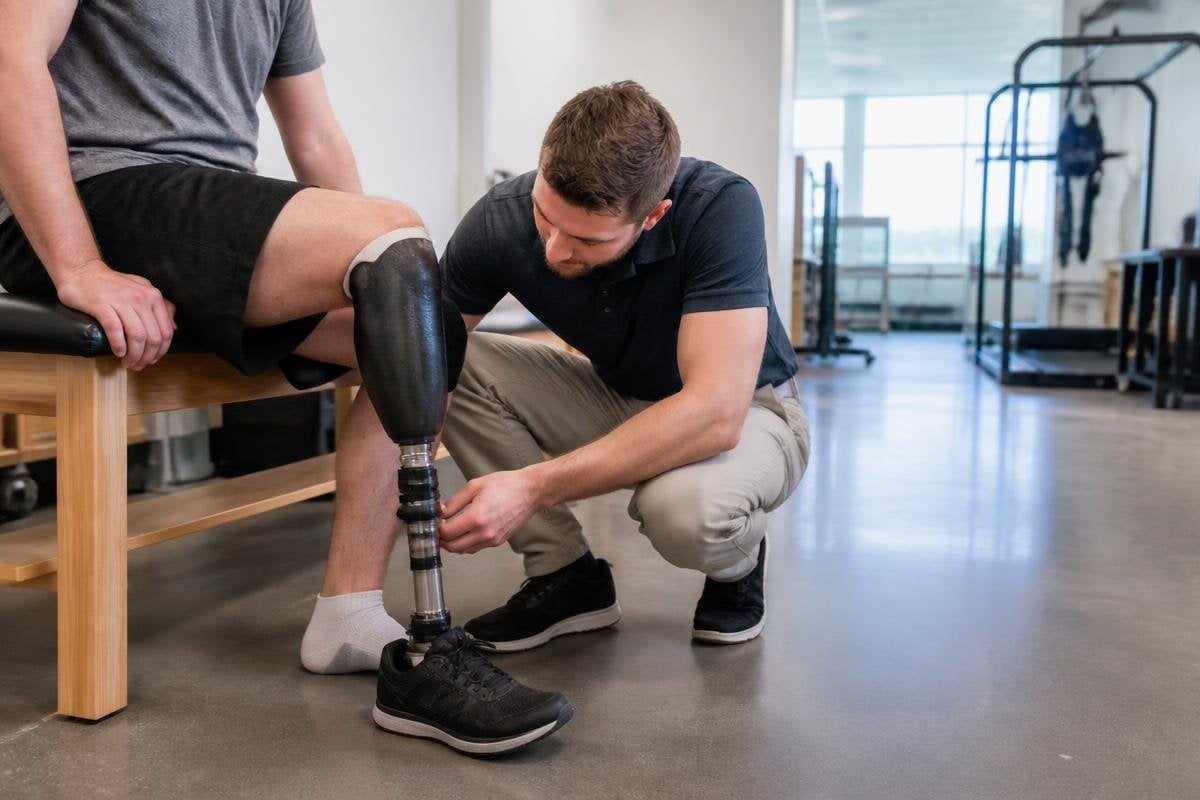
A robotic prosthetic can move a hand, foot, or knee in a test room. The harder question is whether it keeps working after the socket shifts, the battery runs low, or the wearer changes speed.
That question should guide the next stage of robotic prosthetics. The field needs clear evidence about daily use, repair, cost, and control before polished demos become buying advice.
- Daily use matters: movement in a lab says little about comfort across a full day
- Control must be clear: the wearer needs to know what the limb will do
- The bill extends beyond purchase: fitting, service, charging, and repairs all count
Movement is only one part of the job
A prosthetic limb has to connect a person’s body to a machine. That connection includes the socket, sensors, motors, software, and the wearer’s own movement. A report that names only the motor or joint leaves out the part that touches the body.
Control is another open issue. Robotic prosthetics may read muscle signals through electromyography, often called EMG. They may also use pressure sensors, motion sensors, or switches. Each method can change how quickly a person starts a movement and how much training they need.
The useful question is not whether the limb moves. It is whether the wearer can start, stop, and change that movement without fighting the system.
Comfort decides daily use
A limb can have good motion and still fail as a daily tool if the socket causes pain or the added weight makes walking tiring. Those limits belong in every test report beside speed, torque, range of motion, and battery life.
The same applies to sound and heat. Motors, gearboxes, and batteries add parts that may affect comfort near the body. A future product report should state how long the device runs, how it charges, and what happens when power drops.
No source pack was supplied for this topic, so there is no verified price, model number, trial result, or deployment count to cite here. That gap matters. Buyers need those details before they can compare a research prototype with a product ready for clinical fitting.
The evidence that should come next
A useful study should follow the wearer beyond a single controlled task. The report should record the task, the setting, the number of participants, the test period, and the failures. It also needs to say who paid for the work and which results came from the maker.
Readers tracking robotic limbs can use Robot 24 alongside clinical papers to follow named devices, control systems, and trial dates. Those details make it easier to compare a result from one study with the test rules in the next.
The field also needs a shared way to report results. A walking test should state the surface and pace. A hand test should state the object, grip, and number of attempts. A control test should state how often the system misread the wearer’s intent.
Those details may sound narrow. They decide whether a result can guide a purchase or support a clinical decision.
A buyer’s evidence checklist
Use this list when a company, clinic, or research team presents a robotic prosthetic:
- Name the device: record the exact model and version under test
- Check the user group: ask who wore it and how long they used it
- Read the control method: find out which signals start each movement
- Ask about power: record runtime, charging time, and low-battery behavior
- Price the full service: include fitting, training, software, and repairs
- Find the failure record: ask which tasks failed and how often
A strong result should survive ordinary use, not only a prepared demonstration. The result also needs to leave the wearer in control when sensors lose contact, software makes a wrong guess, or the battery needs charging.
What happens next
The next useful reports will connect machine data with the wearer’s own account of comfort, control, and fatigue. Until those reports include named devices, test periods, prices, and failure rates, I’d wait before treating a robotic prosthetic as ready for wide daily use.