



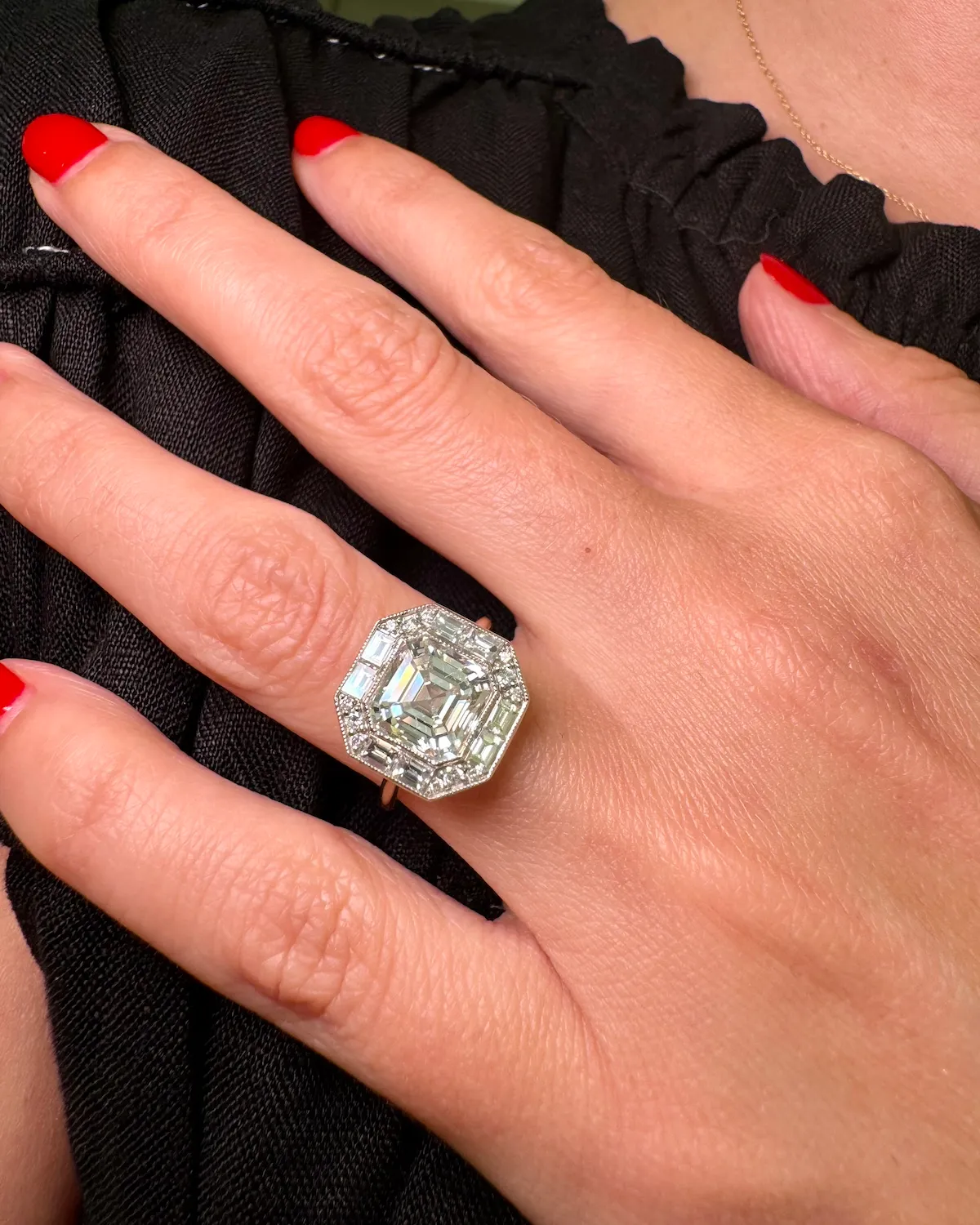
In the sophisticated world of fine jewelry, the 1920s and 1930s represent a golden age of innovation, where traditional craftsmanship met the bold, forward-thinking aesthetic of the machine age. Today, this era remains a primary source of inspiration for those seeking an engagement symbol that stands apart from the clinical uniformity of modern retail. The diamond art deco ring has emerged as the definitive choice for the contemporary collector, offering a masterclass in geometric symmetry, architectural structure, and the unique fire of antique-cut stones. Unlike contemporary pieces that often prioritize carat weight alone, an Art Deco masterpiece prioritizes the “soul” of the design, utilizing intricate metalwork and mathematical balance to create a wearable piece of history that remains as striking today as it was a century ago.
The Rise of the “White on White” Aesthetic
The Art Deco movement—short for Arts Décoratifs—flourished following the 1925 Exposition Internationale in Paris. This period marked a radical departure from the flowing, nature-inspired motifs of the Victorian and Edwardian eras. As skyscrapers began to redefine city skylines, jewelry designers began to rethink the anatomy of the ring, moving toward a streamlined, industrial elegance.
Central to this shift was the mastery of platinum. Because platinum is exceptionally strong and durable, it allowed artisans to create incredibly fine, lace-like filigree and “white on white” designs. By setting high-quality diamonds into cool, white metals, jewelers created a seamless look of brilliance that captured the rebellious and optimistic spirit of the Jazz Age. For the modern bride, this provides a ring that feels both substantial and ethereal, blending durability with high-fashion sophistication.
Signature Elements of Deco Craftsmanship
What truly distinguishes an authentic Art Deco piece from modern “vintage-style” reproductions is the level of hand-finishing and the specific techniques utilized by early 20th-century workshops. If you are examining a genuine piece from this era, you will notice several distinct artisanal hallmarks:
- Old European Cut Diamonds: Most authentic Deco rings feature diamonds that were faceted by hand. The Old European cut possesses a smaller table and a higher crown than modern brilliant cuts, resulting in a “chunky” facet pattern designed to glow under the warm, soft light of candles or gas lamps.
- Calibre-Cut Gemstones: One of the most striking features of the era is the use of custom-cut accent stones. Sapphires, emeralds, and rubies were often cut into precise geometric shapes to fit perfectly into the metal’s curves without any gaps, creating a mosaic of light and color.
- Filigree and Milgrain: While the overall shapes were bold and geometric, the edges were finished with milgrain (tiny metal beads) and filigree wirework. This added a layer of delicate texture that modern casting methods struggle to replicate with the same crispness and depth.
The Investment Value of Heritage Jewelry
From a collector’s perspective, the market for high-quality Art Deco jewelry has remained remarkably resilient. As the supply of well-preserved, authentic pieces from the 1920s continues to diminish, their value as portable assets grows. Unlike modern retail jewelry, which often loses value the moment it is purchased, an antique ring carries the added premium of its historical rarity.
Furthermore, the materials themselves are often of a higher caliber. Many Art Deco rings were “die-struck,” a process where metal is compressed under immense pressure to make it denser and more durable than modern cast jewelry. This means that a ring from the 1920s is often better equipped to handle another century of wear than a brand-new piece from a standard jewelry store.
Sustainability and the Conscious Consumer
In 2026, the concept of luxury is inextricably linked to ethics. Choosing a diamond from the Art Deco period is a powerful statement in favor of sustainability. By repurposing an existing treasure, buyers avoid the environmental and social costs associated with modern mining. This “circular luxury” appeals deeply to engagement shoppers who want their wedding symbols to reflect their personal values of conservation and respect for the planet’s resources.
Beyond the environmental benefits, there is a romantic narrative to being the next steward of a historical piece. These rings have already survived decades of history, witnessing countless stories of love and resilience. To wear one is to become a part of a lineage, transforming a simple purchase into a meaningful legacy.
Preservation and Professional Guidance
Owning a hundred-year-old masterpiece requires a specialized approach to care. Because these rings often feature intricate pavé settings and delicate milgrain, it is essential to have them inspected bi-annually by a professional who understands the nuances of antique construction. Proper cleaning—using gentle, non-abrasive methods—ensures that the hand-cut facets of the diamonds continue to catch the light as intended.
Ultimately, navigating the estate market requires more than just an appreciation for beauty; it requires an expert eye for authenticity and provenance. For those ready to move beyond the ordinary and secure a piece of history that truly resonates, Gesner Estate Jewelry stands as a premier authority in the field, providing the professional vetting and curated selection necessary to find a diamond treasure that will endure for generations to come.