

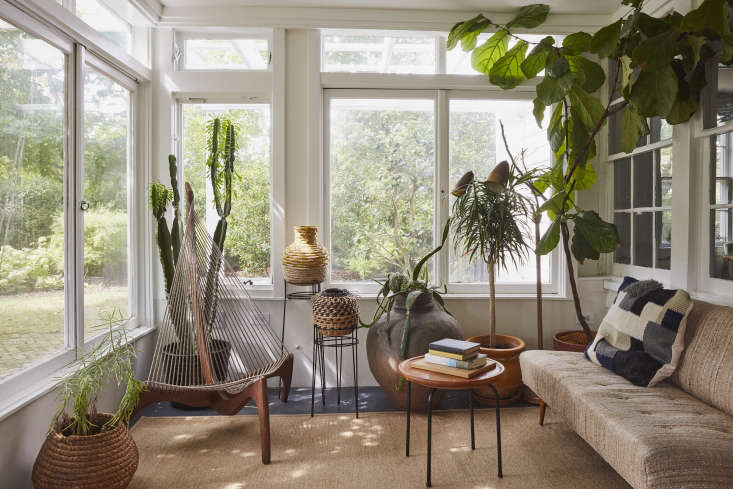
Small or compact rooms can feel cramped when furniture, décor, and accessories compete for limited space. One simple way to create a more open and visually balanced atmosphere is to use tall artificial plants for indoors. Their height naturally draws the eye upward, helping emphasize vertical space while adding greenery without requiring the maintenance of live plants.
The key, however, is placement. A tall artificial plant can make a room feel larger when positioned strategically, but placing one in the wrong spot can have the opposite effect. From empty corners and narrow entryways to areas beside windows and furniture, the right location can add height, depth, and visual breathing room.
This guide explains where to place tall artificial plants to make different rooms look bigger and how to choose the right size, shape, and style for your space.
Why Do Tall Artificial Plants Make a Room Look Bigger?
Tall plants work primarily by creating vertical visual lines. When the eye follows the height of a plant from its base toward the ceiling, it naturally notices the vertical dimension of the room.
They can make a space appear larger by:
- Drawing attention upward
- Filling empty vertical space rather than floor space
- Adding depth to otherwise flat areas
- Softening hard furniture edges
- Creating visual separation between different areas
- Making empty corners feel intentional
- Adding greenery without introducing bulky décor
Unlike many decorative accessories that occupy tables, shelves, or countertops, a tall floor plant uses height to create impact.
Artificial plants have another advantage: you can position them in areas where natural plants might struggle because of limited sunlight, temperature fluctuations, or inconsistent watering.
1. Place a Tall Plant in an Empty Corner
One of the easiest ways to use a tall artificial plant is to place it in an unused corner.
Corners can sometimes make a room feel unfinished or visually disconnected. Instead of filling the area with a large piece of furniture, a tall plant can add interest while maintaining an open floor plan.
Best placement
Try positioning the plant:
- Behind a sofa
- Beside a TV console
- Next to a bookshelf
- Near an empty living room corner
- Beside a large cabinet
- In the corner between two walls
Choose a plant with a relatively narrow profile if the room is small.
Why it works
The plant occupies vertical space without requiring a large horizontal footprint. This helps keep the center of the room open, making the floor area feel less crowded.
Tip: Avoid placing a very wide artificial tree in a narrow corner. A slim, tall silhouette will usually create a better sense of spaciousness.
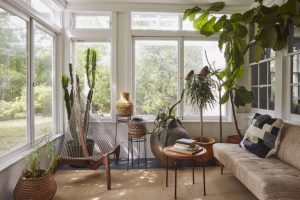
2. Position Plants Beside Large Windows
Windows are naturally associated with openness and depth. Placing a tall artificial plant near a window can reinforce that feeling.
You don’t need to block the window. Instead, position the plant slightly to one side.
Why this placement works
The combination of:
window + natural-looking greenery + vertical height
creates a layered visual effect that can make a room feel more expansive.
If you have a narrow window, place the plant beside it rather than directly in front of it. This keeps the source of natural light visible.
Best plants for this location
Consider:
- Artificial fiddle leaf trees
- Faux olive trees
- Artificial palms
- Faux ficus trees
- Tall leafy plants
Choose an open, airy foliage pattern rather than extremely dense foliage if your goal is to maintain a spacious appearance.
3. Put a Tall Artificial Plant Behind the Sofa
The space behind a sofa is often overlooked.
If your sofa sits against a wall, you may not have enough room. But when the sofa is positioned slightly away from the wall, a tall artificial plant can occupy the unused space behind it.
This creates vertical layering without adding another large piece of furniture.
How to style it
Place the plant toward one end of the sofa rather than directly in the center.
For example:
Plant → Sofa → Coffee table → Open floor
This arrangement creates a natural visual path through the room.
Small-room advantage
Instead of placing a decorative cabinet or console behind the sofa, use a narrow artificial tree. The plant adds height without creating another substantial visual block.
4. Use Tall Plants Near the Entrance
A small entryway can quickly become cluttered with furniture and accessories.
Instead of adding a large entry table, consider using a tall artificial plant in an empty corner.
A vertical plant draws the eye upward as soon as someone enters the room.
Placement tips
Keep the plant:
- Out of the main walking path
- Close to a wall or corner
- Away from doors that swing open
- Narrow enough for the available floor space
A slim planter with a tall plant can be particularly effective in narrow hallways.
5. Place a Tall Plant Next to Low Furniture
One of the most effective styling tricks is to create height contrast.
For example, pair a tall artificial tree with:
- A low sofa
- A short media console
- A low sideboard
- A low-profile bed
- A small accent chair
The contrast makes the plant appear taller while emphasizing the room’s vertical dimensions.
Why height contrast matters
Imagine a room where everything is approximately the same height. The eye tends to move horizontally.
Now introduce a tall plant.
The eye moves from:
low furniture → tall plant → ceiling
This creates a stronger sense of vertical space.
6. Use Tall Artificial Plants in Narrow Corners
Not every artificial tree needs to have a wide canopy.
For small apartments, studios, and compact rooms, look for plants with a slender vertical profile.
Good options include:
- Tall bamboo-style plants
- Slim ficus trees
- Artificial dracaena
- Narrow palms
- Tall eucalyptus arrangements
- Column-shaped faux plants
These plants can add height while taking up relatively little floor area.
The key rule
Think vertically, not horizontally.
If your room is already crowded, avoid artificial plants with extremely wide branches that extend into walkways or seating areas.
7. Place Tall Plants in the Back of a Small Room
Another useful technique is to place a tall plant toward the far end of the room.
This can help create depth.
For example, in a narrow living room, you could place a tall artificial plant near the far corner. The plant becomes a visual destination, encouraging the eye to travel through the room.
This can make the room feel deeper rather than simply wider.
Try this arrangement
Keep the foreground relatively open and use the plant toward the back:
Open floor → furniture → tall plant
The visual layering can create a stronger sense of distance.
8. Use Plants to Define Open-Plan Spaces
Open-plan homes can sometimes feel large but visually undefined.
A tall artificial plant can act as a subtle divider between different areas without blocking the room.
For example, use one between:
- Living room and dining area
- Living room and home office
- Bedroom and dressing area
- Entryway and living room
Unlike a solid partition, a plant maintains visual connections between the spaces.
That makes it particularly useful when you want definition without sacrificing openness.
9. Place Tall Artificial Plants Behind Accent Chairs
A single accent chair can sometimes look disconnected from the rest of a room.
Adding a tall artificial plant behind or beside it creates a visual relationship between the chair and the surrounding décor.
This works especially well in:
- Reading corners
- Living rooms
- Bedrooms
- Home offices
- Sitting areas
Keep the plant slightly behind the chair rather than directly beside the seating area if floor space is limited.
10. Use Tall Plants in Bedrooms to Emphasize Ceiling Height
Bedrooms can benefit from vertical décor because beds and nightstands tend to occupy the lower portion of the room.
A tall artificial plant can introduce height and balance.
Good locations include:
- Beside a dresser
- In an empty corner
- Next to a bedroom chair
- Near a window
- Beside a wardrobe
For smaller bedrooms, select a plant with an airy shape rather than a dense canopy.
This helps maintain a calm, uncluttered appearance.
11. Place a Tall Plant in a Home Office Corner
Home offices often contain desks, chairs, shelves, monitors, and storage cabinets. Adding too many decorative items can quickly make the room feel crowded.
A tall artificial plant can provide greenery without taking up valuable desk space.
Place one:
- Behind the desk
- Beside a bookshelf
- In a corner near the desk
- Next to a window
A vertical plant can also soften the appearance of technology-heavy spaces by introducing organic shapes.
12. Use Tall Plants to Balance Large Furniture
Large furniture pieces can visually dominate a small room.
For example, a large sectional sofa may make one side of the room feel heavier than the other.
A tall artificial plant can help balance that visual weight.
Example
If a large sofa occupies the left side of the room, place a tall plant toward the opposite corner.
This creates a visual balance without requiring another large furniture item.
How Tall Should an Indoor Artificial Plant Be?
Choosing the correct height is just as important as choosing the location.
As a general styling guideline:
| Room/Location | Suggested Plant Height |
| Small apartment corner | 4–6 feet |
| Living room | 5–7 feet |
| Beside large furniture | 5–7 feet |
| High-ceiling room | 6–8+ feet |
| Entryway | 5–7 feet |
| Bedroom | 4–6 feet |
| Home office | 4–6 feet |
| Open-plan space | 5–8 feet |
These aren’t strict rules. The ideal height depends on your ceiling height, furniture dimensions, plant shape, and available floor space.
A simple rule
Your plant should feel proportional to the room, not overwhelmingly large.
A 7-foot artificial tree may look impressive in a room with 10-foot ceilings but could feel crowded in a room with low ceilings.
How to Make Tall Artificial Plants Look More Real
Placement alone isn’t enough. A poorly styled artificial plant can look artificial and make the room feel more cluttered.
Try these techniques.
Choose a Natural-Looking Planter
The planter is part of the overall design.
Consider materials and finishes such as:
- Ceramic
- Concrete
- Woven baskets
- Matte finishes
- Natural wood
- Neutral-colored planters
Choose a planter that complements your furniture rather than competing with it.
Add Natural-Looking Moss or Filler
If the plant’s base looks artificial, add decorative moss, stones, or another natural-looking filler to conceal the stem and soil area.
This can make the arrangement look considerably more realistic.
Avoid Perfectly Symmetrical Leaves
Real plants rarely have perfectly identical shapes.
If your artificial plant allows adjustment, gently reposition some branches so the foliage looks naturally distributed.
Keep Some Empty Space Around the Plant
Don’t surround your plant with several other decorative objects.
Negative space helps the plant stand out and prevents the area from becoming visually crowded.
Common Placement Mistakes to Avoid
Even the best artificial plant can make a room feel smaller if it’s positioned incorrectly.
1. Blocking Windows
Don’t cover a significant portion of a window with a large plant.
2. Blocking Walkways
Keep plants away from high-traffic areas where they can make movement feel restricted.
3. Choosing an Oversized Canopy
Height can make a room feel bigger, but excessive width can make it feel cramped.
4. Using Too Many Tall Plants
One strategically placed plant can have a stronger impact than several large plants scattered throughout the room.
5. Ignoring Proportion
A massive tree in a tiny room can overwhelm the furniture and ceiling height.
6. Putting Plants Everywhere
Artificial plants should complement your décor, not become the entire décor.
How Many Tall Artificial Plants Should You Use?
For most small and medium-sized rooms, one strategically positioned tall plant is often enough.
Larger rooms may benefit from two or more plants, but they don’t necessarily need to be identical.
You can create balance by using:
- One tall plant in a corner
- One smaller plant near a window
- Low greenery on a shelf or table
This creates different levels of greenery without making the room feel like an indoor jungle.
Best Tall Artificial Plant Styles for Small Rooms
If your primary goal is to make a room feel larger, prioritize plants with vertical growth and relatively open foliage.
Some good choices include:
Artificial Fiddle Leaf Trees
Their tall stems and large leaves create a strong vertical accent.
Faux Olive Trees
The relatively open foliage can provide greenery without making the room feel heavy.
Artificial Bamboo
Tall, narrow bamboo-style plants work particularly well in compact spaces.
Artificial Dracaena
Their upright growth makes them useful for narrow corners.
Artificial Palm Trees
Palms can introduce height and a relaxed atmosphere, particularly in larger rooms.
Faux Eucalyptus Trees
Their lighter, airy foliage can work well in minimalist interiors.
Quick Placement Formula for a Bigger-Looking Room
If you’re unsure where to start, follow this simple formula:
- Find an empty corner.
- Choose a plant that reaches upward rather than outward.
- Keep the planter relatively narrow.
- Position the plant beside—not in front of—windows.
- Pair it with low or medium-height furniture.
- Keep the surrounding floor area uncluttered.
- Make sure it doesn’t obstruct movement.
The goal isn’t simply to add greenery. It’s to use vertical space strategically.
Final Thoughts
Tall artificial plants can be more than decorative accessories. When positioned correctly, they can help create the perception of greater height, depth, and openness in a room. Empty corners, areas beside windows, spaces behind sofas, entryways, and open-plan transitions are particularly effective locations.
The most important principle is proportion. Choose a plant that fits the room, prioritize vertical silhouettes when space is limited, and leave enough negative space around the arrangement. With the right placement, even a compact room can feel more balanced, open, and inviting.
For a wide selection of realistic greenery and floral décor, Fake Flowers can be a useful place to explore artificial plants and flowers for different interior styles. Whether you’re decorating a small apartment, refreshing a home office, or adding height to a living room, the right artificial greenery can bring lasting visual impact without the maintenance of live plants.